10 Life Skills Everyone Should Learn Before Living Independently

July 7, 2026

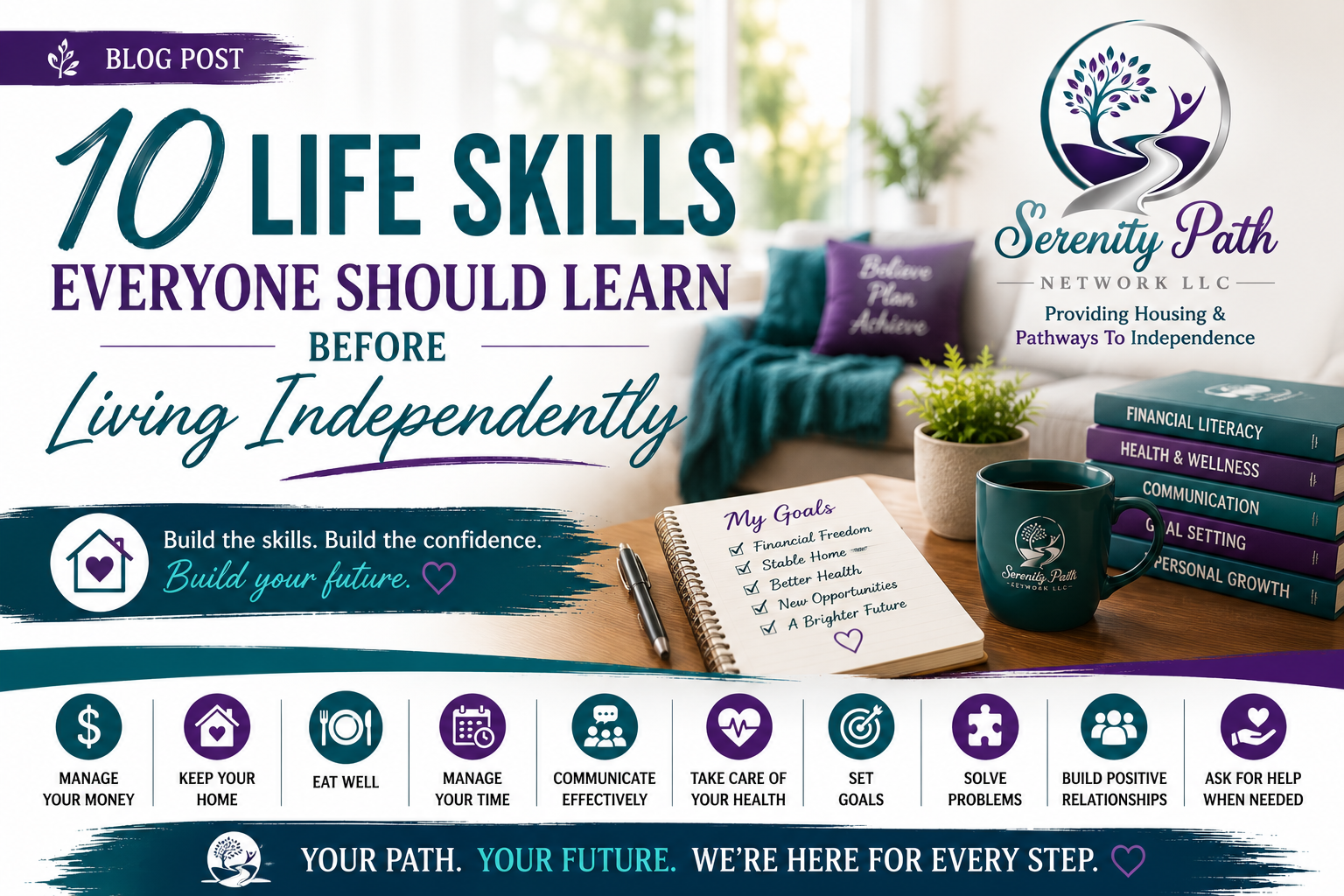
10 Life Skills Everyone Should Learn Before Living Independently

Becoming independent isn't just about having a place to live—it's about developing the skills needed to build a stable, successful, and fulfilling life. Whether you're a veteran transitioning to civilian life, a senior seeking greater independence, a woman starting a new chapter, or someone rebuilding after a major life change, strong life skills can make all the difference.

At Serenity Path Network LLC, we believe that independence is built one skill, one habit, and one goal at a time. While everyone learns at their own pace, these ten essential life skills can help create a solid foundation for long-term success.

1. Managing Your Money

Financial responsibility is one of the most important parts of independent living.

Learning how to manage your income allows you to pay bills on time, prepare for unexpected expenses, and work toward future goals.

Good financial habits include:

  • Creating a monthly budget
  • Paying bills on time
  • Tracking spending
  • Saving for emergencies
  • Avoiding unnecessary debt

Even small savings today can make a big difference tomorrow.

2. Keeping Your Living Space Clean

A clean home promotes physical health, reduces stress, and creates a more comfortable environment.

Develop routines for:

  • Laundry
  • Washing dishes
  • Vacuuming and sweeping
  • Cleaning bathrooms
  • Taking out the trash
  • Changing bed linens

Taking pride in your home also helps build personal responsibility.

3. Cooking Simple, Healthy Meals

Eating out every day can quickly become expensive.

Learning to prepare simple meals helps you:

  • Save money
  • Eat healthier
  • Gain confidence
  • Become more self-sufficient

Start with easy recipes and gradually expand your cooking skills over time.

4. Managing Your Time

Successful people learn how to balance work, appointments, responsibilities, and personal time.

Helpful habits include:

  • Using a calendar
  • Setting reminders
  • Planning your week
  • Arriving on time
  • Prioritizing important tasks

Good time management reduces stress and helps you stay focused on your goals.

5. Communicating Effectively

Strong communication builds healthy relationships at home, at work, and within your community.

Practice:

  • Active listening
  • Speaking respectfully
  • Asking questions
  • Expressing concerns calmly
  • Resolving conflicts constructively

Good communication opens doors to opportunities and stronger connections.

6. Taking Care of Your Health

Independent living also means taking responsibility for your physical and mental well-being.

Remember to:

  • Schedule medical appointments
  • Take medications as directed
  • Stay physically active
  • Get enough sleep
  • Eat nutritious foods
  • Practice stress management

Healthy habits support every other area of your life.

7. Setting Personal Goals

Goals provide direction and motivation.

Think about where you'd like to be in:

  • Six months
  • One year
  • Five years

Your goals might include:

  • Finding stable employment
  • Saving money
  • Continuing your education
  • Purchasing a vehicle
  • Renting your own apartment
  • Building a stronger support network

Break large goals into smaller, achievable steps.

8. Solving Problems with Confidence

Challenges are a part of life.

Instead of becoming overwhelmed, practice asking yourself:

  • What is the problem?
  • What are my options?
  • Who can help if I need support?
  • What is the best next step?

Learning to solve problems builds resilience and confidence.

9. Building Positive Relationships

The people you surround yourself with can influence your future.

Choose relationships that encourage:

  • Respect
  • Honesty
  • Accountability
  • Encouragement
  • Growth

Healthy relationships provide support during difficult times and celebrate successes along the way.

10. Asking for Help When You Need It

One of the greatest strengths is knowing when to seek assistance.

Independent living doesn't mean facing every challenge alone.

Whether you need guidance with employment, budgeting, transportation, healthcare, education, or community resources, reaching out for support is a sign of determination—not weakness.

There are people and organizations ready to help you succeed.

Independence Is a Journey

No one is born knowing how to manage every aspect of independent living. These skills are learned through experience, practice, and persistence.

Progress may happen one small step at a time, and that's okay.

Celebrate each accomplishment, learn from challenges, and continue moving forward with confidence.

How Serenity Path Network LLC Supports Independence

At Serenity Path Network LLC, we understand that achieving independence involves more than simply providing housing. It means creating an environment where individuals can build confidence, develop practical life skills, and connect with valuable community resources.

Our mission—Providing Housing & Pathways to Independence—reflects our commitment to helping veterans, justice-involved veterans, seniors, women, and individuals returning to the community build brighter futures.

Every person's journey is unique, but one thing remains the same: with the right support, determination, and opportunities, lasting independence is possible.

At Serenity Path Network LLC, we're here to help you take the next step—one skill, one goal, and one success at a time.

July 7, 2026
Budgeting Tips for First-Time Independent Living Residents Learning to manage your money is one of the most important steps toward successful independent living. Whether you're moving into your first home, transitioning from military service, beginning a new chapter after a life change, or working toward long-term independence, having a budget can reduce stress and help you reach your goals. At Serenity Path Network LLC , we believe financial stability is one of the building blocks of independence. You don't have to earn a large income to manage your money well—you simply need a plan. Here are practical budgeting tips to help you start your journey with confidence. Why Budgeting Matters A budget is more than a list of expenses—it's a roadmap for your financial future. When you know where your money is going, you can: Pay your bills on time Reduce financial stress Avoid unnecessary debt Save for emergencies Plan for future goals Build confidence and independence Budgeting gives you control over your finances instead of letting your finances control you. 1. Know Your Monthly Income Before creating a budget, determine exactly how much money you receive each month. Include all reliable sources of income, such as: Employment wages Veteran benefits Retirement income Disability benefits Social Security Other recurring income Always budget using the amount you know you can count on. 2. List Your Essential Expenses Start with the bills that must be paid each month. Examples include: Housing Utilities Food Transportation Phone service Insurance Medical expenses Household supplies These should always come before optional spending. 3. Track Every Dollar Many people are surprised by how much they spend on small purchases. For one month, write down every expense—even a cup of coffee or a quick trip to the convenience store. Tracking your spending helps you identify habits and areas where you may be able to save. 4. Separate Needs From Wants One of the easiest ways to stay on budget is to understand the difference between needs and wants. Needs Housing Groceries Transportation Utilities Medications Work-related expenses Wants Dining out Streaming subscriptions Entertainment New electronics Impulse purchases There's nothing wrong with treating yourself occasionally, but your needs should always come first. 5. Build an Emergency Fund Unexpected expenses happen to everyone. A flat tire, medical bill, or car repair can quickly become stressful if you don't have savings. Start small. Even saving $10–$25 each week can add up over time. Your goal isn't perfection—it's preparation. 6. Avoid Lifestyle Inflation When your income increases, it's tempting to spend more. Instead of immediately upgrading everything, consider: Increasing your savings Paying down debt Investing in education or training Building long-term financial security Growing your savings is often more rewarding than increasing your spending. 7. Plan Your Grocery Shopping Food is one area where small changes can create significant savings. Helpful tips include: Make a shopping list before leaving home. Plan meals for the week. Compare prices. Buy store brands when appropriate. Avoid shopping when you're hungry. Cook meals at home more often. Preparing meals yourself can save hundreds of dollars each month. 8. Set Financial Goals Having a purpose for your money makes budgeting easier. Your goals might include: Buying a vehicle Moving into your own apartment Building a three-month emergency fund Paying off debt Continuing your education Saving for a home Write your goals down and review them regularly to stay motivated. 9. Review Your Budget Every Month Life changes, and your budget should change with it. Each month, ask yourself: Did I stay within my budget? What unexpected expenses came up? Where can I improve? Am I making progress toward my goals? A budget is a living plan that should grow with you. 10. Ask for Financial Guidance When Needed No one is expected to know everything about managing money. If you're unsure where to start, seek guidance from trusted financial education programs, community organizations, or experienced mentors. Learning from others can help you avoid costly mistakes and build lifelong financial habits. Small Habits Lead to Big Results Financial success rarely happens overnight. It comes from making consistent, thoughtful decisions every day. Paying one bill on time. Saving a few dollars each week. Choosing to cook at home. Tracking your spending. These small habits build confidence, reduce stress, and create lasting financial stability. How Serenity Path Network LLC Supports Financial Independence At Serenity Path Network LLC , we understand that independent living is about more than having a place to call home. It's about building the skills and confidence needed to thrive. Through safe housing and connections to community resources, we encourage residents to develop practical life skills—including financial responsibility—that support long-term success. Our mission, Providing Housing & Pathways to Independence , reflects our commitment to helping veterans, justice-involved veterans, seniors, women, and individuals rebuilding their lives take meaningful steps toward a brighter future. Every Dollar Has a Purpose Budgeting isn't about limiting your dreams—it's about giving your dreams a plan. Every dollar you save, every bill you pay on time, and every financial goal you reach is another step toward greater independence. At Serenity Path Network LLC, we're honored to support individuals as they build a future filled with stability, opportunity, and hope—one smart financial decision at a time.
July 6, 2026
The First 90 Days In Independent Living: What To Expect
July 6, 2026
Transitional Housing vs. Independent Living: What's the Difference?
By Jessica Lyles June 30, 2026
Introducing The Path To Hope Sponsor Program
By Jessica Lyles June 28, 2026
Honoring Those Who Served: How the Veterans Path to Independence Independent Living Program Makes a Difference
By Jessica Lyles June 28, 2026
What Are Independent Living Homes? A Pathway to Stability and Independence