Transitional Housing vs. Independent Living: What's the Difference?
Transitional Housing vs. Independent Living: What's the Difference?
When searching for housing after a major life transition, you may come across terms like transitional housing and independent living. While these programs share a common goal—helping people achieve stability—they serve different purposes and meet different needs.
Understanding the difference can help individuals, families, and referral agencies choose the housing option that best supports long-term success.
What Is Transitional Housing?
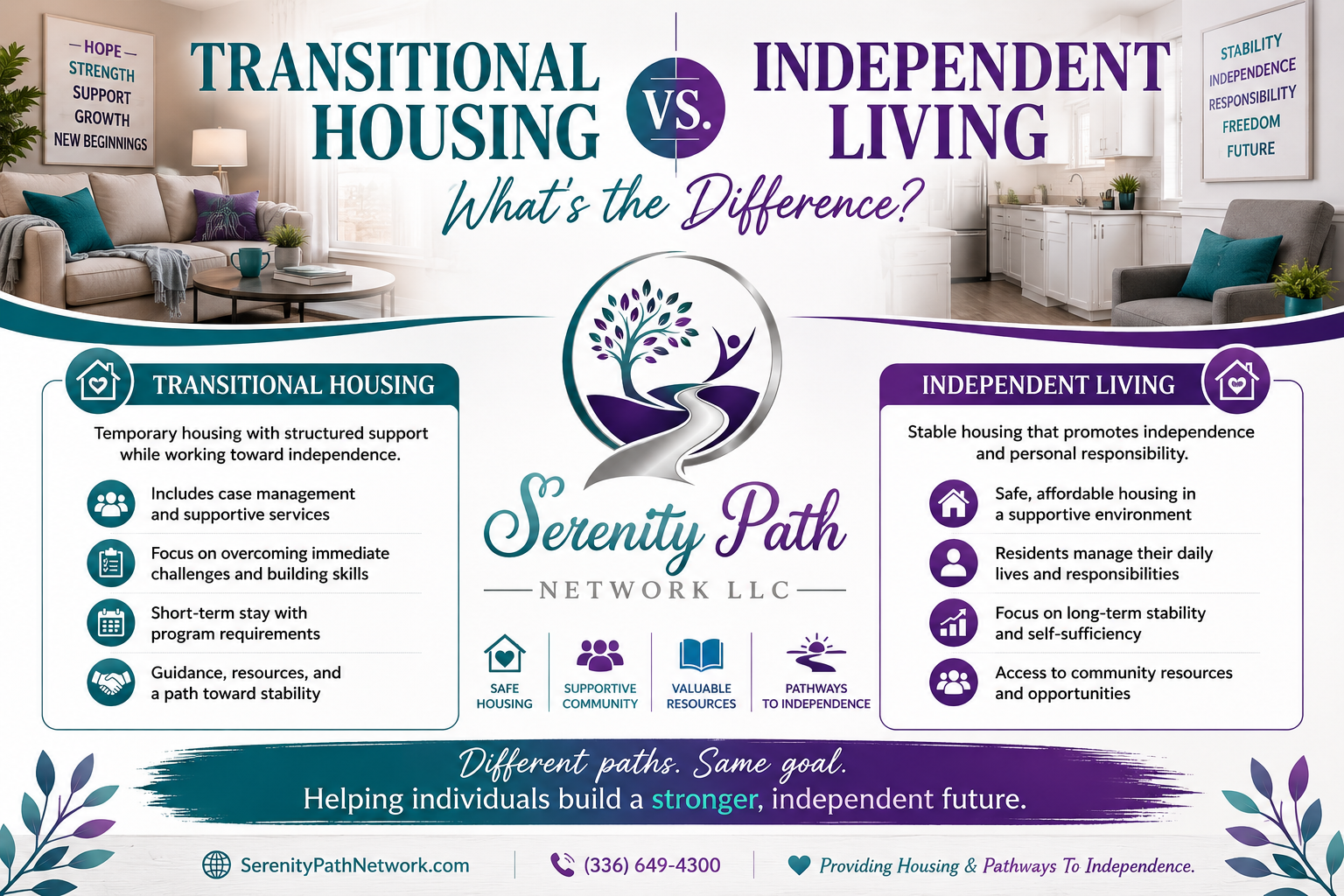
Transitional housing is designed for individuals who need temporary housing and structured support while working toward permanent independence. These programs often serve people experiencing homelessness, veterans, survivors of domestic violence, individuals recovering from substance use, or people returning to the community after incarceration.
The goal of transitional housing is to provide a safe, stable place to live while participants address barriers that may have contributed to housing instability.
Many transitional housing programs include services such as:
- Case management
- Employment assistance
- Financial literacy education
- Life skills development
- Referrals to healthcare and community resources
- Goal planning
- Assistance finding permanent housing
Most transitional housing programs have a defined length of stay, although this varies depending on the program and the individual's circumstances.
What Is Independent Living?
Independent living focuses on providing safe, affordable housing for individuals who are capable of managing their daily lives but may still benefit from a supportive environment and access to community resources.
Unlike highly structured housing programs, independent living places greater emphasis on personal responsibility and self-sufficiency. Residents are expected to manage their own schedules, employment, finances, and daily routines while living in a stable housing environment.
Independent living often appeals to individuals who have already made significant progress and are ready to continue building their independence.
Support may include:
- Stable housing
- Resource referrals
- Employment connections
- Educational opportunities
- Budgeting guidance
- Transportation resources
- Community partnerships
The focus is not on intensive supervision but on providing a solid foundation from which residents can continue moving forward.
Key Differences
Transitional HousingIndependent LivingTemporary housing with structured supportHousing that emphasizes independence and personal responsibilityOften includes regular case managementResidents manage their own daily lives while accessing available resourcesDesigned to help overcome immediate barriersDesigned to help maintain long-term stabilityMay have stricter program requirementsGreater flexibility and independenceOften serves individuals in crisisOften serves individuals ready for the next step toward self-sufficiency
Which Option Is Right for You?
The right choice depends on your current situation and your goals.
Transitional housing may be the best fit if you:
- Need additional structure and guidance
- Are overcoming significant life challenges
- Need help connecting with community services
- Are working toward stable employment or permanent housing
Independent living may be a better fit if you:
- Can manage your daily responsibilities independently
- Need safe and affordable housing
- Want to continue building financial stability
- Are ready to work toward long-term self-sufficiency
- Value a supportive community while maintaining your independence
How Serenity Path Network LLC Supports Independence
At Serenity Path Network LLC, we believe that stable housing creates opportunities for growth, confidence, and long-term success.
Our housing programs are designed for individuals who are working toward greater independence, including veterans, justice-involved veterans, seniors, women, and individuals returning to the community after incarceration.
While every resident's journey is different, our mission remains the same: Providing Housing & Pathways to Independence. We strive to offer safe, affordable housing while connecting residents with valuable community resources that support employment, education, financial wellness, transportation, and other essential services.
Taking the Next Step
Choosing the right housing program is an important decision. Whether someone needs a structured transitional program or an independent living environment, the ultimate goal is the same: creating a stable foundation for a brighter future.
If you or someone you know is exploring housing options, take time to understand the level of support that's needed today while keeping long-term independence in mind. The right environment can make all the difference in helping someone build confidence, achieve personal goals, and create lasting stability.
At Serenity Path Network LLC, we're committed to providing more than a place to live—we're committed to helping people move forward with dignity, purpose, and hope, one step at a time.