What Is It Like Living in a Shared Living Program? What to Expect at Serenity Path Network LLC
Moving into a shared living program can be a big step. For some people, it may be their first opportunity to experience stable housing after a difficult period. For others, it may be a transition between one living situation and the next stage of independence.
At Serenity Path Network LLC, we believe it is important for applicants and residents to understand what shared living is really like before moving in.
Shared living is more than having a room in a house. It means becoming part of a community, respecting shared spaces, following program expectations, and taking responsibility for your own goals and daily life.
What Is Shared Living?
Shared living means that residents have their own designated living space while sharing certain areas of the home with other residents.
Depending on the specific property and program, shared areas may include:
- Kitchen
- Living room
- Dining area
- Laundry area
- Bathrooms
- Outdoor spaces
- Other common areas
The purpose is to provide a safe and stable environment where residents can live alongside others while working toward greater independence.
You Can Expect Structure
One of the biggest differences between shared living and renting a traditional apartment is the structure.
Residents are expected to understand and follow the program's policies and procedures. These expectations help create a safe, respectful, and predictable environment for everyone.
You may be expected to:
- Follow house and program rules
- Keep your personal space clean
- Participate in household responsibilities
- Respect quiet hours and other residents
- Take care of shared property
- Follow guest policies
- Meet financial or program responsibilities
- Communicate with staff when problems arise
- Participate in required meetings or check-ins
- Work toward your individual goals
The purpose of structure is not to control residents. It is to create an environment where everyone knows what is expected.
You Will Have Responsibilities
Shared living works best when everyone contributes.
You should expect to take responsibility for your own belongings, personal hygiene, schedule, appointments, employment or education responsibilities, and daily decisions.
Residents may also have household responsibilities such as cleaning shared areas, properly disposing of trash, maintaining their room, and helping keep the home comfortable for everyone.
Your home is your responsibility, too.
You Will Be Living With Other People
This may be one of the biggest adjustments.
Not everyone in the home will have the same personality, schedule, background, habits, or preferences.
You may have a roommate or share common areas with people who live differently than you do.
That means communication and respect are extremely important.
You may need to learn how to:
- Respect personal boundaries
- Communicate concerns appropriately
- Share household spaces
- Resolve disagreements
- Respect different schedules
- Keep noise at an appropriate level
- Be considerate of others
- Ask for help before a small issue becomes a major problem
You don't have to become best friends with everyone.
You do need to learn how to live respectfully with others.
Privacy Still Matters
Shared living does not mean you have to give up your sense of privacy.
Residents should respect one another's personal space and belongings. Personal information, conversations, and boundaries should also be treated respectfully.
At the same time, residents should understand that shared housing comes with more interaction and less privacy than living completely alone.
Knowing this before moving in can help you determine whether shared living is the right environment for you.
Expect Rules About Guests
Because multiple people share the home, guest policies are important.
Programs may have specific rules regarding:
- Who may visit
- Visiting hours
- Overnight guests
- Guest behavior
- Common-area use
- Safety and security
These rules are designed to protect residents and maintain a stable environment.
Always ask about guest policies during the application or intake process so you understand the expectations before moving in.
Expect to Participate in Your Own Growth
At Serenity Path Network LLC, housing is not viewed as the final destination.
It can be a pathway toward greater stability and independence.
Residents may be encouraged to work on goals related to:
- Employment
- Education
- Budgeting
- Life skills
- Transportation
- Housing stability
- Personal responsibility
- Community connections
- Benefits and resources
- Long-term housing plans
Your goals will depend on your individual situation and the requirements of the specific program.
You Don't Have to Do Everything Alone
One of the benefits of a structured housing environment is having access to connections and resources.
When appropriate, residents may be connected with community organizations, agencies, employment resources, educational opportunities, housing resources, and other supportive services.
Serenity Path Network LLC is not a replacement for every specialized service a resident may need. Instead, we believe in building strong referral networks so residents can connect with the appropriate resources.
What Happens When There Is a Problem?
Problems can happen in any household.
A disagreement with another resident does not automatically mean someone has failed.
What matters is how the situation is handled.
Residents are expected to communicate concerns appropriately and follow the program's procedures for reporting issues or requesting assistance.
If you have a problem, don't ignore it until it becomes bigger.
Communicating early can often help prevent unnecessary conflict.
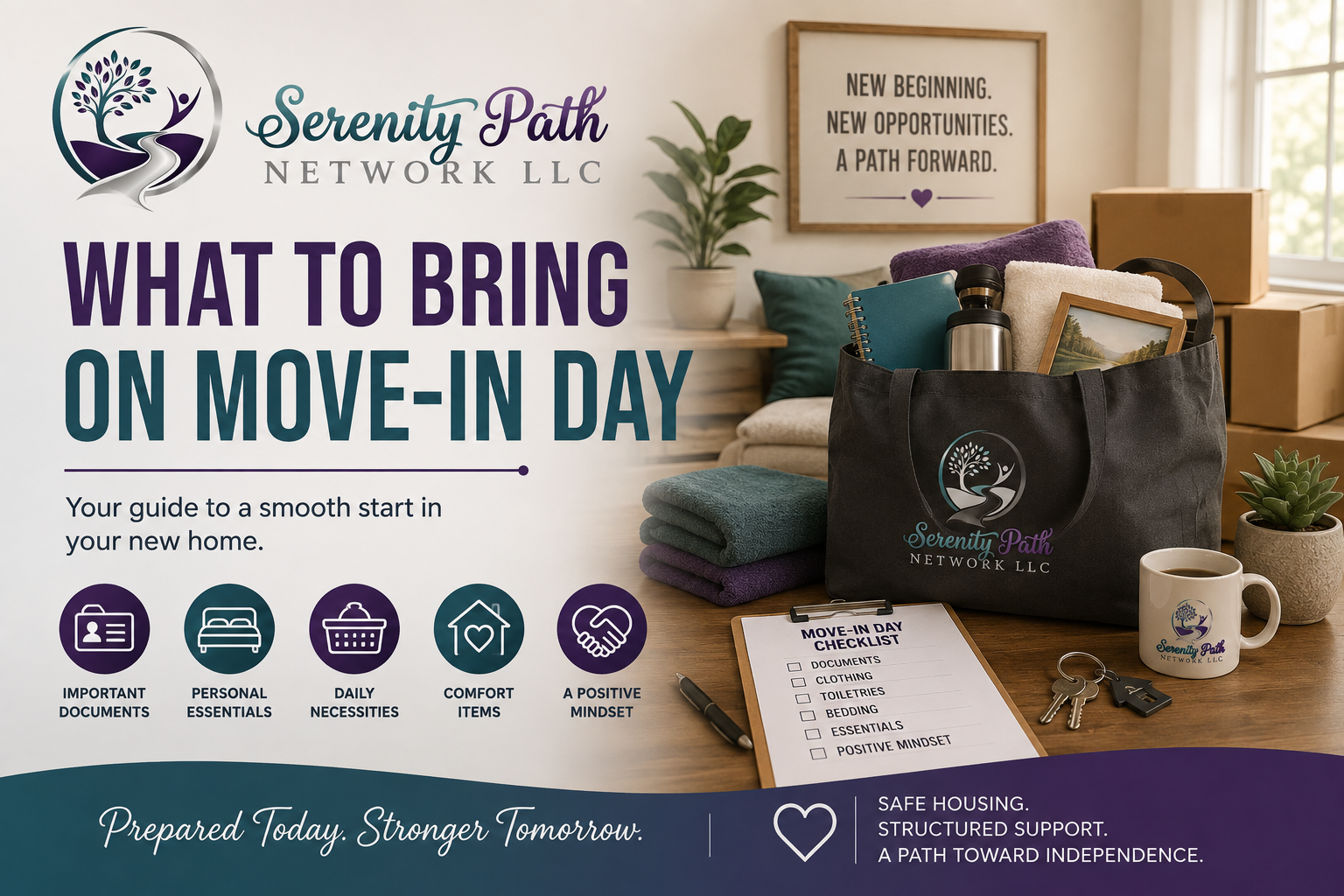
What Should You Bring?
Before moving in, residents should receive information about what is provided at the property and what they are responsible for bringing.
Generally, you should be prepared with your personal necessities, important documents, clothing, personal hygiene items, medications or medical supplies you are responsible for, and other items required for your daily life.
Avoid bringing items that are prohibited under the program's policies.
Always review the move-in information and program rules before arrival.
What Should You Expect During Your First Few Days?
The beginning can feel exciting, uncomfortable, or even overwhelming.
You are learning:
- Where everything is located
- Who you are living with
- Household routines
- Program expectations
- Cleaning responsibilities
- Communication procedures
- How to interact with staff
- How to manage your new schedule
Give yourself time to adjust.
You don't have to figure everything out on the first day.
Ask questions, pay attention to the orientation process, read the policies, and communicate when you are unsure about something.
Shared Living Requires Give and Take
One of the most important things to understand is that shared living requires compromise.
You may have preferences about how things should be done. Other residents will have preferences, too.
Learning to compromise while maintaining healthy boundaries is part of developing independent living skills.
The question isn't always:
"How do I get everyone to do things my way?"
Sometimes the better question is:
"How can we create a living environment that works for everyone?"
Is Shared Living Right for You?
Shared living may be a good option if you are looking for:
- Stable housing
- A structured living environment
- An opportunity to develop independent living skills
- Connection to community resources
- Accountability
- A pathway toward greater housing independence
However, shared living may not be the right fit for everyone.
Before applying, consider whether you are comfortable sharing common spaces, following program policies, respecting other residents, participating in household responsibilities, and working toward your housing goals.
The Bottom Line
Living in a shared living program is a learning experience.
There will be rules. There will be responsibilities. There may be challenges.
But there can also be opportunities.
You can learn how to manage a household, communicate with others, establish routines, build stability, connect with resources, and prepare for your next step.
At Serenity Path Network LLC, we believe that stable housing can be the beginning of a new chapter.
Shared living isn't about simply having a place to sleep. It's about creating a safe and structured environment where you can build stability, develop skills, and continue your pathway toward independence.
Thinking About Applying?
If you are considering a Serenity Path Network LLC program, take time to learn about the specific program, eligibility requirements, application process, house expectations, and available resources before making your decision.
Our waitlist is currently open.
We encourage applicants, families, referral partners, and community agencies to learn more about our programs and determine whether shared living is the right fit for the individual seeking housing.
Serenity Path Network LLC
Providing pathways toward stability, growth, and independence.