What to Do If You Are Hungry or Without Food in Alamance County, NC
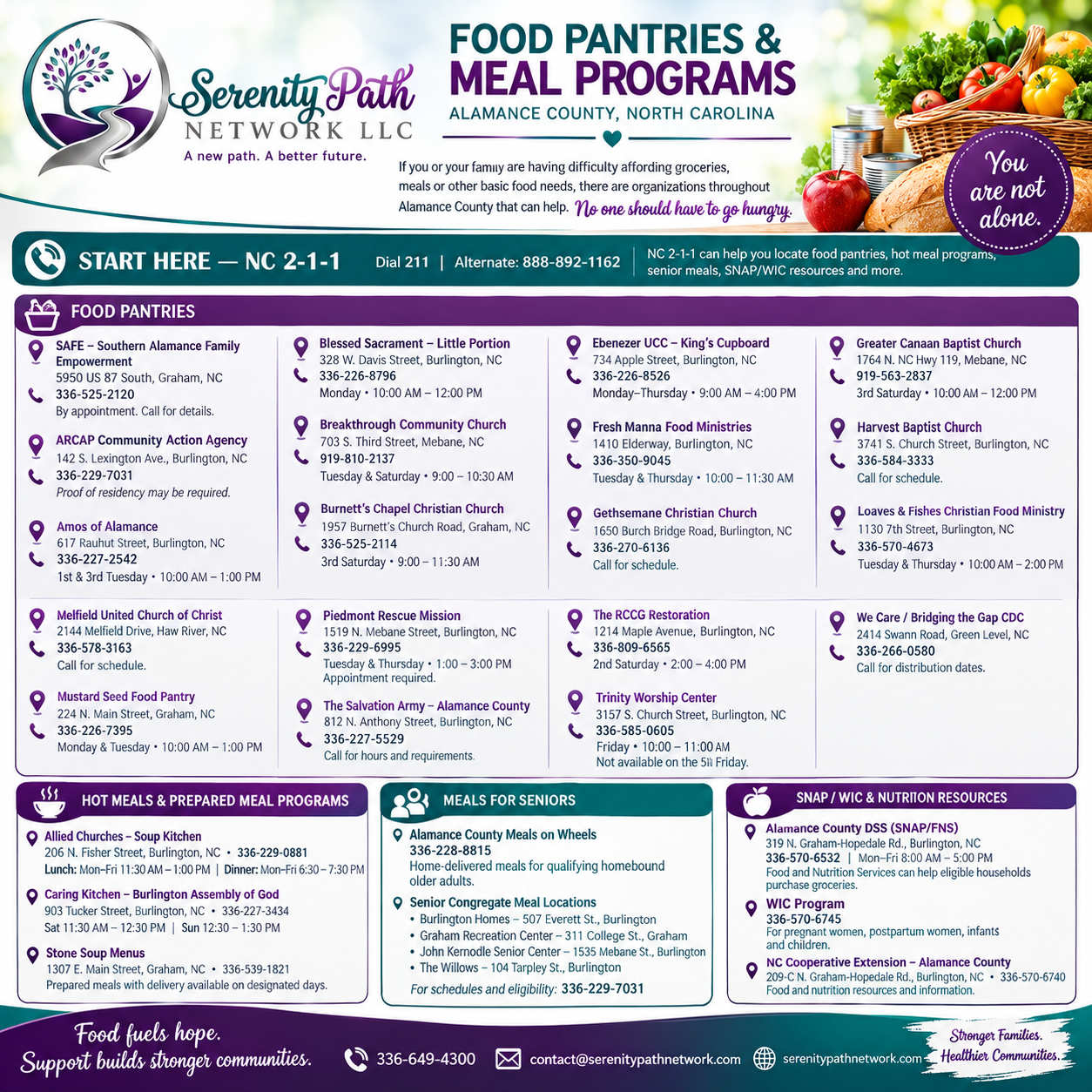
You Don't Have to Go Hungry

Not having enough food can happen to anyone. You may have lost your job, experienced an unexpected expense, become homeless, had your SNAP benefits interrupted, or simply reached a point where there is more month left than money.

Whatever the reason, there are food resources available throughout Alamance County.

If you are hungry today, don't wait until the situation becomes worse. Start making calls and connecting with local food resources.


๏ปฟ

๐Ÿฅซ 1. Call 211 First

If you aren't sure where to find food, dial 2-1-1.

NC 211 can help connect you with local food pantries, meal programs, emergency assistance, and other community resources.

Tell the representative:


“I am in Alamance County and I need food assistance. I don't have enough food to eat today.”

Ask specifically for:

  • Food pantries near you
  • Free meal programs
  • Emergency food assistance
  • Food distributions
  • Programs serving children
  • Programs serving seniors
  • Transportation to food resources

The Alamance County Food Resource Guide also recommends calling 211 to locate nearby food assistance.


๐ŸŽ 2. Apply for SNAP/Food and Nutrition Services

If you regularly struggle to afford groceries, you may qualify for Food and Nutrition Services (FNS), North Carolina's SNAP program.

Contact:

Alamance County Department of Social Services

Phone: (336) 570-6532
Address:
319 N. Graham-Hopedale Road, Burlington, NC 27217
Hours:
Monday–Friday, 8:00 AM–5:00 PM

Alamance County DSS accepts applications for Food and Nutrition Services and other assistance programs. Applications can also be completed through NC ePASS.

You can also ask DSS about other benefits you may qualify for, including Medicaid and Work First assistance.

Don't assume you make too much to qualify.

Eligibility depends on household circumstances and income. If you're unsure, apply or call and ask.


๐Ÿฅ– 3. Visit a Local Food Pantry

Food pantries can provide groceries that you can take home and prepare.

The Alamance County Food Resource Guide maintained by N.C. Cooperative Extension lists numerous food pantries throughout Burlington, Graham, Mebane, and surrounding communities.

Some listed resources include:

ARCAP Community Action Agency

Address: 142 S. Lexington Avenue, Burlington
Phone:
(336) 229-7031

AMOS of Alamance

Address: 617 Rauhut Street, Burlington
Phone:
(336) 227-2542

Blessed Sacrament — Little Portion

Address: 328 W. Davis Street, Burlington
Phone:
(336) 226-8796

Breakthrough Community Church Food Pantry

Address: 703 S. Third Street, Mebane
Phone:
(919) 810-2137

Salvation Army of Alamance County

Phone: (336) 227-5529

Food pantry schedules and eligibility requirements can change, and some programs operate only on specific days. Call before going whenever possible.


๐Ÿฒ 4. Look for Free Meals — Not Just Food Boxes

If you are hungry right now and don't have a way to prepare food, ask about served meals rather than only food pantries.

United Way of Alamance County maintains information about local served-meal programs and food pantries, and local resource guides include organizations providing meals throughout the county.

When calling an organization, ask:


“Do you provide a hot meal today?”

You can also ask:


“If you don't serve meals today, do you know somewhere nearby that does?”

One organization may be able to direct you to another resource even if they cannot help you themselves.


๐Ÿ  5. If You Are Homeless AND Hungry

If you are experiencing homelessness, don't try to solve the housing and food problems separately.

Contact Allied Churches of Alamance County.

Phone: (336) 229-0881

Allied Churches is a major local resource for individuals experiencing homelessness and also connects people with meals and other supportive resources.

When you call, explain both problems:


“I am currently homeless and I don't have food. I need to know what emergency food and shelter resources are available.”

You can also contact DSS at (336) 570-6532 for assistance connecting with available public benefits and community resources.


๐Ÿ‘ถ 6. If You Are Pregnant or Have Young Children

If you are pregnant, breastfeeding, or have young children, ask about WIC — Women, Infants, and Children.

Alamance County WIC

Phone: (336) 570-6745

The Alamance County Health Department's WIC program provides nutrition assistance and support for eligible women, infants, and children. Appointments are required for enrollment.

You may also want to ask about:

  • WIC benefits
  • Infant formula assistance
  • Breastfeeding support
  • Nutrition education
  • Children's food assistance
  • SNAP/FNS


๐Ÿ‘ต 7. If You Are a Senior

Older adults may have additional food resources available to them.

Ask about:

  • Meals on Wheels
  • Congregate senior meals
  • Senior food boxes
  • Local food pantries
  • SNAP/FNS
  • Community meal programs

The Alamance County food resource information includes Meals on Wheels and senior-focused meal resources.

If transportation is a problem, tell the organization that when you call.

Don't simply say, “I need food.”

Say:


“I need food, but I don't have transportation to pick it up.”

That may change which resources are appropriate for you.


๐Ÿš— 8. Don't Have Transportation?

Transportation can become a major barrier to receiving food.

When you contact 211, DSS, a food pantry, church, or community organization, explain that you cannot get to the food distribution location.

Ask whether they have:

  • Delivery
  • Mobile food distributions
  • Transportation assistance
  • A pantry closer to you
  • A meal program within walking distance

The Alamance County Food Resource Guide specifically directs residents to 211 for help locating resources nearby.


๐Ÿ“‹ 9. What Should You Bring to a Food Pantry?

Requirements vary by organization.

If you have them, bring:

  • Photo ID
  • Proof of address
  • Documentation for household members
  • Benefit information
  • Proof of income, if requested
  • Reusable bags or boxes

But don't assume you cannot receive help because you don't have everything.

Call first and ask what the pantry requires.

Some organizations may have different rules for emergency assistance.


๐Ÿ“ž Important Numbers to Save

Resource & Phone

Emergency...911

NC 211...211

Alamance County DSS...(336) 570-6532

Allied Churches...(336) 229-0881

ARCAP Community Action Agency...(336) 229-7031

AMOS of Alamance...336) 227-2542

Blessed Sacrament/Little Portion...(336) 226-8796

Salvation Army...(336) 227-5529

Alamance County WIC...(336) 570-6745

Serenity Path Network...(336) 649-4300

The county and community resource guides confirm these local food-assistance contacts.


๐Ÿ“ What to Say When You Call

If you're nervous about asking for help, you can simply say:


“Hi, I'm currently struggling to get enough food. I live in Alamance County and I need food assistance. Can you tell me what resources are available today?”

If you're homeless:


“I'm currently homeless and I don't have food. I need help finding a meal or food pantry and I also need help with housing.”

If you have children:


“I'm responsible for children and we don't have enough food. I'm looking for emergency food assistance and any programs we may qualify for.”

You don't have to tell your entire life story.

Just explain what you need right now.


โค๏ธ Asking for Food Assistance Is Not Something to Be Ashamed Of

Hunger doesn't mean that you have failed.

People can find themselves without enough food because of job loss, medical expenses, housing costs, reduced hours, unexpected bills, family emergencies, or many other circumstances.

The important thing is to ask for help before the situation becomes a crisis.

Start with 211.

Contact DSS if you need ongoing food assistance.

Contact a local food pantry or meal program if you need food immediately.

And if you're also experiencing homelessness, tell the agency that you need both food and housing assistance.


Serenity Path Network

Serenity Path Network believes that access to food, safe housing, and community resources are important parts of building a stable future.

Our mission is:

Providing Housing & Pathways To Independence.

If you are experiencing housing instability, homelessness, or need information about our transitional housing programs, contact us.

Serenity Path Network LLC
๐Ÿ“ž
(336) 649-4300
๐Ÿ“ง
contact@serenitypathnetwork.com
๐ŸŒ
SerenityPathNetwork.com

A new path. A better future.


Important Reminder

Food pantry hours, eligibility requirements, distribution schedules, and available supplies can change. Call before traveling to a location whenever possible.

For the most current countywide food information, use 211 and the Alamance County Food Resource Guide.

If you are experiencing a medical emergency or someone is in immediate danger, call 911.

September 28, 2026
Introducing the Serenity Path Foundation: Building Stronger Paths for Our Community
September 17, 2026
Veterans In Justice Path To Independence (VIJPTI) Supporting Veterans. Restoring Stability. Building Independence. ***Coming 2027*** The Veterans In Justice Path To Independence (VIJPTI) program is designed to support veterans who are currently involved with the justice system, transitioning from incarceration, returning to the community, or facing barriers that make securing stable housing and rebuilding their lives more difficult. At Serenity Path Network LLC , we believe a veteran's past circumstances should not define their future. VIJPTI provides a structured, supportive living environment where veterans can focus on stability, accountability, personal growth, and long-term independence. Who We Serve VIJPTI is designed for veterans who may be: Returning to the community following incarceration Currently involved with the criminal justice system On probation, parole, or community supervision Transitioning from correctional facilities Experiencing housing instability or homelessness Facing employment or financial barriers Rebuilding relationships and community connections Working toward greater stability and independent living What We Provide Through our Housing With Resources™ approach, participants receive more than a place to live. We connect veterans with resources and opportunities designed to help them move toward self-sufficiency. Program support may include: ๐Ÿ  Stable Housing Safe, structured living environments designed to provide veterans with a foundation for rebuilding their lives. ๐Ÿ“‹ Individualized Support Participants work toward goals based on their individual circumstances, needs, and path toward independence. โš–๏ธ Justice-System Navigation Support with navigating reentry, probation, parole, court-related obligations, and connections to appropriate community resources. ๐Ÿ’ผ Employment & Career Development Connections to employment opportunities, workforce resources, career development, and skills that support financial independence. ๐Ÿ’ฐ Financial Stability Encouragement and resources focused on budgeting, income management, employment, and preparing for greater financial independence. ๐Ÿงญ Life Skills & Independent Living Development of practical skills such as household responsibilities, communication, time management, conflict resolution, and responsible decision-making. ๐Ÿค Community Reintegration Support in rebuilding positive community connections and developing healthy routines, relationships, and support networks. ๐ŸŽฏ Personal Accountability & Goal Setting Participants establish measurable goals and work toward milestones that support their transition to greater independence. Our Approach VIJPTI recognizes that successful reentry requires more than simply having a place to stay. Veterans may need coordinated support, structure, resources, and opportunities to rebuild stability. Our goal is to help participants move through a Path To Independence —from immediate housing stability toward employment, financial responsibility, personal growth, and sustainable independent living. A New Chapter Starts Here Your past does not have to determine your future. Veterans In Justice Path To Independence provides veterans with an opportunity to stabilize, rebuild, and move forward with purpose. Serenity Path Network LLC is committed to helping veterans transition from justice involvement toward a more stable and independent future. Ready to Begin Your Path To Independence? Apply for Housing | Join the Waitlist | Contact Serenity Path Network Program eligibility, availability, and services may vary based on individual circumstances and available resources.
September 17, 2026
Women’s Path to Independence (WPTI) ***Coming 2027*** A Safe Place to Begin. A Stronger Path Forward. Women’s Path to Independence (WPTI) is a dedicated transitional and independent living program of Serenity Path Network LLC designed to help women establish stability, rebuild their lives, and work toward greater independence. WPTI recognizes that women may arrive at our program from many different circumstances. Some may be leaving an unsafe relationship. Others may be transitioning from incarceration, homelessness, an unstable living environment, or another challenging chapter of life. Wherever her journey begins, WPTI provides a pathway forward. Who WPTI Serves WPTI is designed to support women from a variety of backgrounds and life circumstances, including: Domestic violence survivors transitioning to safe and stable housing Women with children or other dependents Women without dependents Women transitioning from correctional facilities or the justice system Women returning to the community after incarceration Women experiencing or at risk of homelessness Women transitioning from shelters or temporary housing Women leaving an unstable or unsafe living environment Women rebuilding after significant life challenges Women seeking a structured environment while working toward independence Women who need assistance connecting to employment, education, community resources, and other supportive services WPTI is intended to provide a safe, structured, and supportive environment while participants work toward their individual goals. More Than Housing. A Path Forward. For a woman starting over, stability can be the first step toward everything else. WPTI combines housing with resources, life-skills development, goal planning, and community connections to help participants build a foundation for long-term independence. ๐Ÿ  Safe & Stable Housing A structured living environment where women can establish stability while working toward their next housing goal. ๐Ÿ›ก๏ธ Support for Survivors Women leaving domestic violence situations may need more than housing—they may need a safe environment, resources, referrals, and an opportunity to rebuild. ๐Ÿ‘ฉ‍๐Ÿ‘ง Housing for Women With Dependents WPTI can support women with children or other dependents, with housing options and availability based on individual circumstances and program requirements. ๐Ÿ‘ฉ Independent Living for Women Without Dependents Women without dependents can also receive support while working toward employment, financial stability, permanent housing, and independent living. ๐Ÿ”„ Reentry & Reintegration Women transitioning from correctional facilities or returning to the community can receive support as they work toward stable housing and successful community reintegration. ๐Ÿ’ผ Employment & Career Resources Connections to workforce development, employment opportunities, education, training, and career resources. ๐Ÿ’ฐ Financial Stability Development of practical skills related to budgeting, saving, managing expenses, and preparing for long-term independence. ๐Ÿงบ Independent Living Skills Practical skills such as household management, organization, communication, time management, decision-making, and personal responsibility. ๐Ÿงญ Community Resources & Referrals Connections to appropriate community organizations and resources based on each participant's individual needs. ๏ปฟ Our Approach WPTI is built around four stages: STABILITY → SUPPORT → GROWTH → INDEPENDENCE We recognize that everyone's path is different. Some women may need a safe place after leaving an abusive relationship. Some may be rebuilding their lives after incarceration. Some may be working to provide a stable home for their children. Others may simply need the opportunity and structure to get back on their feet. WPTI meets women where they are and helps them build toward where they want to be. A New Chapter Starts With a Safe Place At Serenity Path Network, we believe a difficult chapter does not have to define a woman's future. WPTI is designed to give women the opportunity to: Find Stability. Build Confidence. Develop Skills. Access Resources. Create Goals. Build Independence. Your past is part of your story. It doesn't have to be the end of it. Women’s Path to Independence A Safe Place. A Supportive Environment. A Path Toward Independence. [ APPLY NOW] | [ JOIN THE WAITLIST ] | [ CONTACT US ]
September 17, 2026
Veterans Path to Independence (VPI) A Path Forward. A Place to Belong. A Future to Build. Veterans Path to Independence (VPI) is a dedicated transitional and independent living program of Serenity Path Network LLC designed to support veterans as they move toward stable housing, greater independence, and long-term self-sufficiency. We believe that serving our country should never leave a veteran without a safe place to call home or a pathway toward a better future. VPI provides more than a place to live. It creates a structured environment where veterans can regain stability, develop life skills, connect with resources, and work toward their individual goals. Our Mission The mission of Veterans Path to Independence is to help veterans transition from housing instability and other barriers toward safe housing, independence, stability, and self-sufficiency . Through housing, supportive resources, life-skills development, and connections to community services, VPI is designed to meet veterans where they are while helping them move toward where they want to be. What VPI Provides ๐Ÿ  Transitional & Independent Living Safe, structured housing options designed to provide veterans with a stable foundation while they work toward their next chapter. ๐Ÿค Personalized Support We work to understand each participant's circumstances, needs, strengths, and goals so that their path forward can be individualized. ๐Ÿ“‹ Needs Assessment & Goal Planning Participants can work through an assessment process to identify immediate needs, barriers, and personal goals while developing a practical plan for independence. ๐Ÿ’ผ Employment & Career Resources Participants are connected with employment, workforce-development, educational, and career resources that can help them move toward greater financial stability. ๐Ÿ’ฐ Financial & Life Skills VPI promotes practical independent-living skills, including budgeting, household responsibilities, organization, planning, and preparing for long-term housing stability. ๐Ÿงญ Community Resource Connections Veterans may be connected with appropriate community resources and partner organizations based on their individual needs. ๐Ÿพ Support for Veterans with ESAs Where applicable, select Serenity Path Network properties may accommodate Emotional Support Animals (ESAs) . Availability and property requirements apply. Our Approach At VPI, we understand that every veteran's journey is different. Our approach is centered around: Stability → Support → Skills → Independence We aim to provide veterans with the foundation they need to take their next steps with greater confidence and direction. VPI is not simply about where someone lives today. It is about helping create a pathway toward where they want to live, work, and thrive tomorrow. Who VPI Is Designed to Serve Veterans Path to Independence is designed for veterans who may be experiencing housing instability, transitioning from another living situation, facing barriers to independent living, or seeking additional structure and resources while working toward greater self-sufficiency. Eligibility, availability, housing options, and program requirements may vary. Building Independence Together Serenity Path Network believes that independence does not mean having to do everything alone. Through partnerships with community organizations, veteran-serving agencies, workforce resources, housing partners, and other supportive services, VPI seeks to create a network of resources around each participant. Our goal is simple: Help veterans move from uncertainty to stability — and from stability to independence. VPI Is Opening Fall 2026 Veterans Path to Independence is scheduled to launch Fall 2026. Housing availability will be limited, and interested veterans are encouraged to complete the application and screening process as early as possible. Ready to Take the Next Step? Apply for Housing Begin the application process and allow our team to learn more about your housing needs. Join the Waitlist If housing is not immediately available, eligible applicants may be placed on the appropriate waitlist. Have Questions? Contact Serenity Path Network to learn more about VPI, housing availability, eligibility, and the application process. [ APPLY NOW ] [ JOIN THE WAITLIST ] [ CONTACT US ]
August 25, 2026
What to Bring on Move-In Day: Your Guide to Getting Settled
August 25, 2026
What Is It Like Living in a Shared Living Program? What to Expect at Serenity Path Network LLC
August 25, 2026
Are You a Group Home? Understanding What Serenity Path Network LLC Provides
August 20, 2026
What To Do If You Become Homeless In Alamance County NC
August 13, 2026
How to Prepare for Moving Into Independent Living
August 13, 2026
What to Look for When Choosing Safe, Affordable Housing